

A pet water fountain is worth considering when it solves a real problem: your cat keeps visiting a dripping tap, your dog needs a better-positioned water station, or several pets leave a small bowl full of hair before the day is over. The useful question is what would improve their access to water-and whether a fountain makes that improvement easy to maintain.
Quick answer: A pet water fountain is worth considering when it improves the outlet, location or shared access your pet uses. Keep a familiar bowl during the trial, compare the maintenance burden and choose a model you can clean consistently. A fountain is optional equipment, not a requirement for every pet.
On this page
- When it helps
- WOPET examples
- Try the change
- Ownership costs
- Common questions
Some pets are perfectly happy with a clean bowl. A fountain adds moving water and filtration, but it also adds a filter, a pump or dispensing mechanism, and sometimes a battery. Choose one because those trade-offs suit your household.
Start with the problem you want to solve
| What you notice | What a fountain might change | What it will not fix |
|---|---|---|
| A cat seeks out a tap | Offer another kind of drinking outlet. | A dislike of the location or an underlying change in thirst. |
| A good drinking spot has no nearby socket | A cordless model can make that location practical. | The need to recharge and inspect it. |
| Several pets share a small bowl | A larger station can hold more water. | One pet blocking another from drinking. |
| Hair collects on the water | A suitable prefilter can catch some debris. | Dirty surfaces or overdue washing. |
Moving water is an option, not a guarantee
A cat may investigate a stream because it is different from a still bowl. Another cat may dislike the motor sound, moving reflections or an unfamiliar tray. Dogs also vary: some drink readily from a fountain while others prefer the open surface they already know.
A small study of healthy cats offered bowls and fountains did not establish a substantial increase in drinking or more dilute urine. That makes the practical goal straightforward: offer a useful choice, observe your pet and avoid promising medical benefits from a purchase.
When a bowl may be the better purchase
If you cannot regularly take the fountain apart, wash it and obtain the correct filters, a simple bowl may be easier to keep clean. The same applies if your pet is frightened by the device or if lifting a full reservoir is awkward. A bigger, more expensive station is not automatically a better daily tool.
Before replacing anything, try a clean bowl in a quieter location. If the pet drinks comfortably there, the main problem may have been access rather than the lack of flowing water. This small trial can save a purchase that does not address the actual issue.
Three WOPET examples for different householdsWOPET W03: ceramic with flexible placement
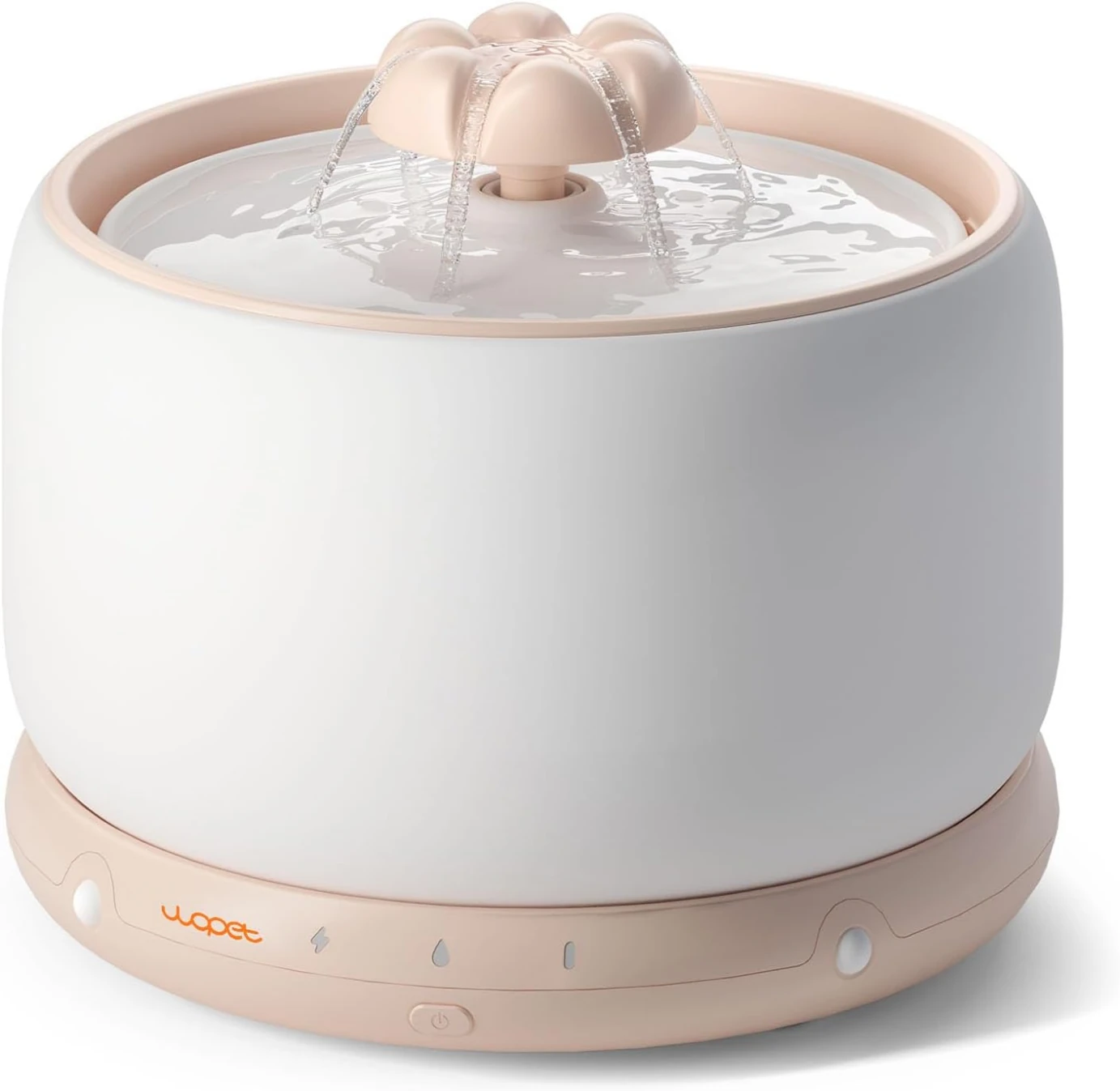
WOPET W03 · 3L · Rechargeable / cordless
The W03 pet water fountain is a 3L cordless ceramic fountain with a rechargeable base. Compare it when a cat or small dog prefers a spot away from the outlet. Allow room to lift the ceramic bowl and separate washable parts from the electrical base.
WOPET W600 Pro: a larger cordless station
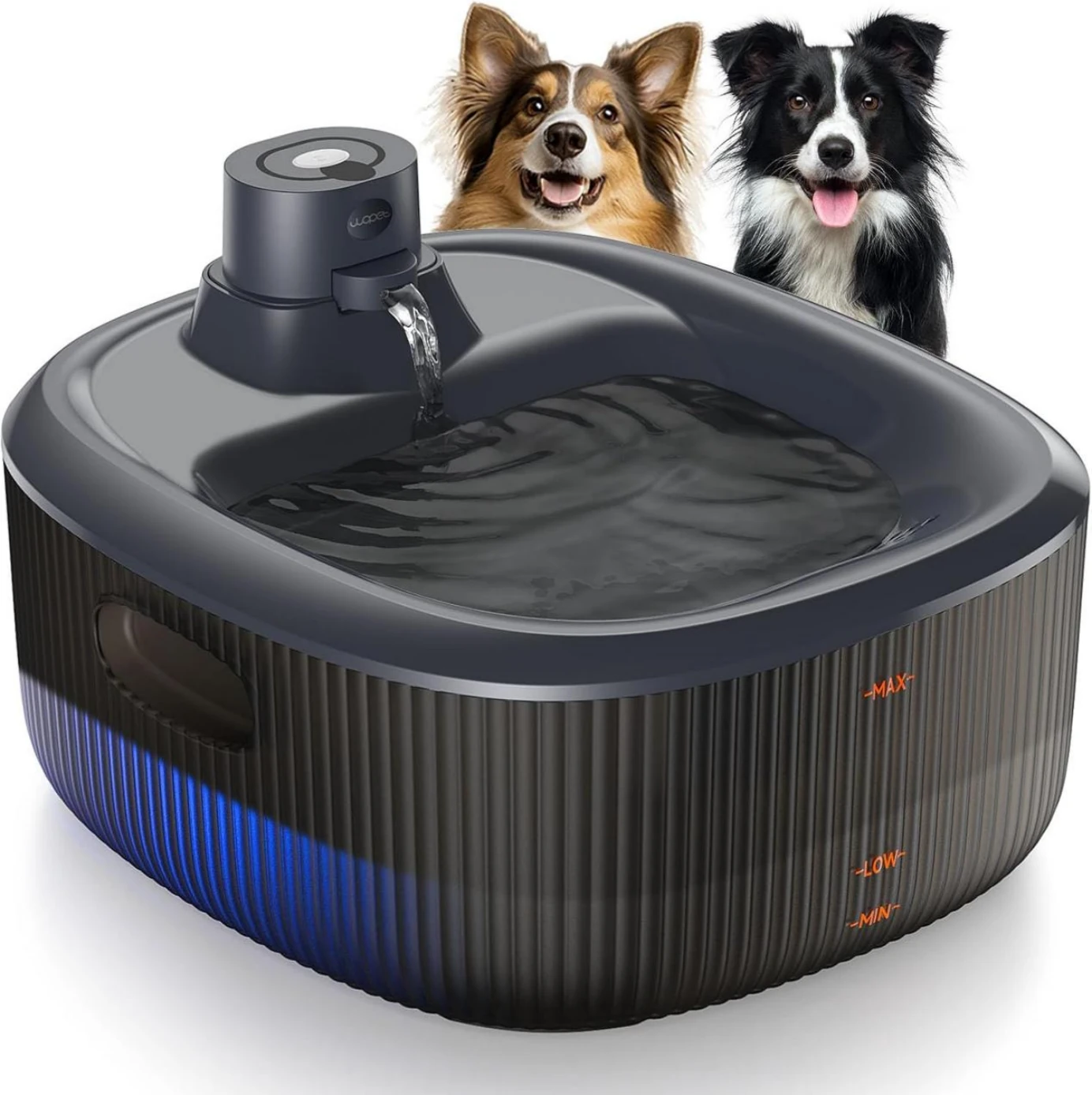
WOPET W600 Pro · 6L · Rechargeable / cordless
The W600 Pro pet water fountain holds 6L and is rechargeable. It is the more relevant comparison for a larger dog or several cats sharing a station. Check approach space and the effort needed to empty and wash the tank, rather than treating extra capacity as extra days without care.
WOPET A08: an 8L fixed station for shared use
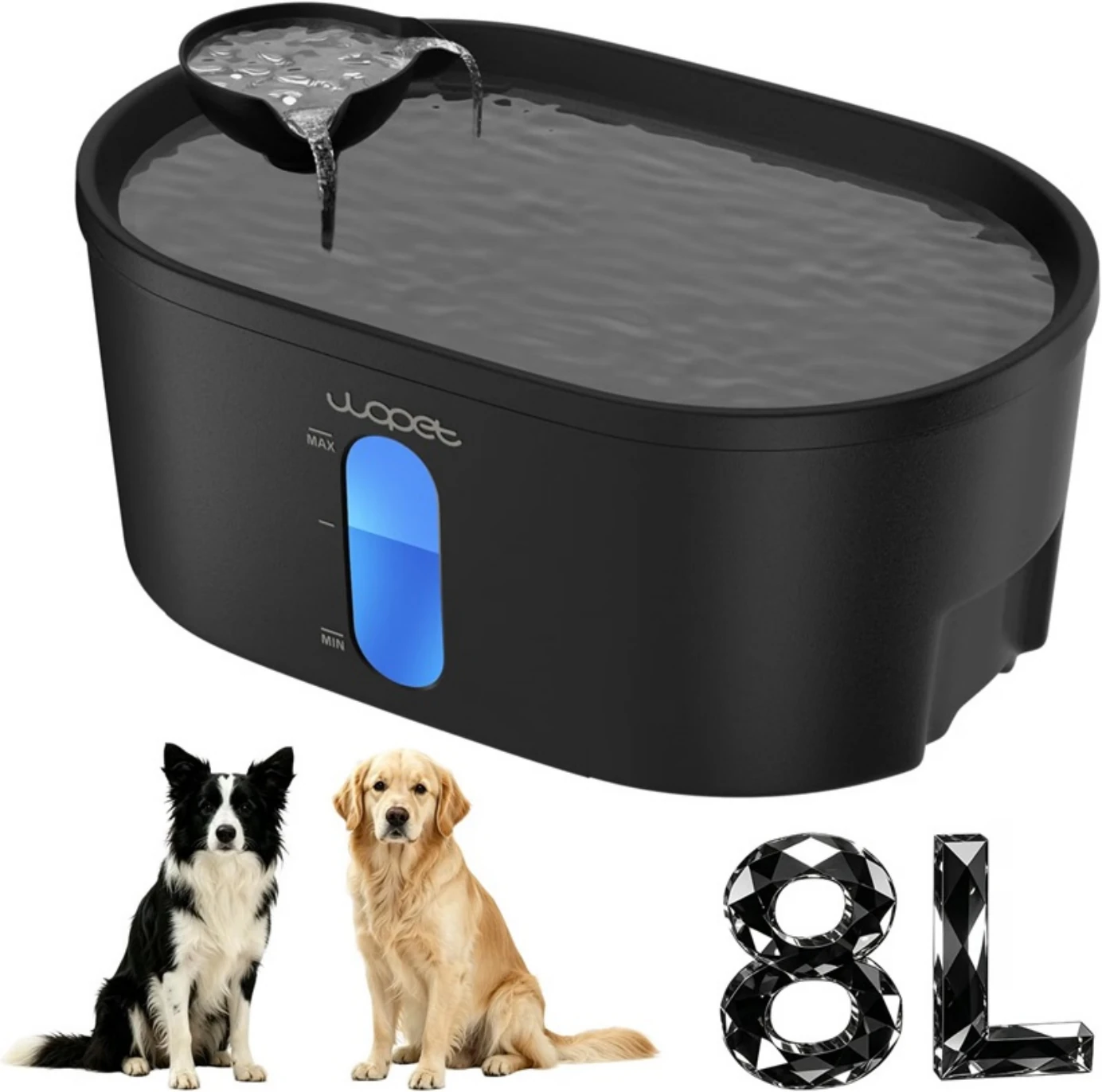
WOPET A08 · 8L · Plug-in
The plug-in A08 pet water fountain is designed for dogs and multi-cat homes. Its 8L tank and broad drinking area make it worth considering for heavier use, provided there is a suitable outlet and you can handle the larger reservoir. It is not a cordless alternative to the W600 Pro.
Try it alongside the familiar bowl
Set up the fountain according to its manual and leave the existing fresh-water bowl available. Let your pet approach at their own pace. Watch several normal visits: do they drink, splash, hesitate or leave when another pet comes near? Curiosity alone is not evidence that the new station works.
Check the level and water condition each day. If the pet avoids the fountain, adjust one thing at a time-position, permitted flow setting or proximity to other pets-rather than removing their familiar water source to force a choice.
Budget for the routine, not just the device
Count compatible filters, cleaning time, a brush if required, and access to service parts. For a cordless model, add charging to the routine. AVMA hygiene guidance recommends frequent washing of pet food and water bowls; a fountain still needs surface cleaning as well as its model-specific maintenance.
If drinking habits change suddenly, ask your veterinarian rather than trying to fix the change by buying different equipment. A fountain can provide another water option; it cannot establish why a pet is drinking more or less.
Run a simple household trial before committing
Spend a few days looking at the current setup. Record where the pet drinks comfortably, what makes them hesitate and when the bowl becomes dirty or low. You are looking for a pattern you can change: an inconvenient location, a cramped drinking surface or a refill job that repeatedly catches you late.
Then try the least complicated adjustment first. Move a clean bowl to the quieter proposed location while keeping the original water available. If access improves, you have learned something useful about placement. A cordless pet fountain might make that spot convenient, but you do not need to claim that circulation caused the improvement.
If moving water is the feature you want to try, set up the pet water fountain according to its manual and leave the bowl available. Watch ordinary visits over several days. Drinking with a relaxed posture is more informative than a pet touching the stream once for a photograph. Keep the decision reversible while the animal learns the station.
How the decision changes between households
One cautious cat
For one cat, the smaller station may be easier to place and wash. A 3L W03 is a relevant comparison when ceramic and cordless placement matter. The main questions are whether the tray is accepted, the approach is clear and the electrical base can stay dry during the cleaning routine.
A dog and several cats
In a shared home, capacity and access need separate answers. W600 Pro offers the 6L rechargeable option among these examples, while A08 provides an 8L plug-in station. Neither means every pet must share. Give the hesitant animal another route to water instead of asking a larger reservoir to solve a social problem.
A household where several people provide care
Agree on who checks water, who washes the parts and who replaces filters. A visible note with the model name and last service date prevents someone assuming another person has already done the job. Keep the actual manual available so a helper does not wash the battery base or buy a similar-looking filter that does not fit.
What you are paying for over time
The price of the device is only one line in the budget. Look up the exact filter pack, count the replacements recommended by its instructions and include delivery where relevant. Check whether pump service parts are available and what the seller requires for a support claim. Keep the receipt and model information together.
Time is another cost. A simple weekly job that fits your sink is easier to sustain than an elaborate assembly that must be balanced on a narrow counter. Before ordering, read the cleaning sequence and imagine where each wet and dry part will go. Easy maintenance is a buying feature, not an afterthought.
If you often travel, choose a station another person can manage without guesswork. Extra stored water does not replace a care visit. A helper needs to check the pet, the water and actual flow, and provide a clean alternative during maintenance or a fault.
Decide what success looks like
| Keep the setup when… | Reconsider it when… |
|---|---|
| The pet drinks comfortably and returns voluntarily. | The pet repeatedly avoids it despite a gradual introduction. |
| You can inspect, empty and wash it reliably. | Cleaning is so awkward that you postpone it. |
| It solves the location or access problem you identified. | The same crowding or blocked approach remains. |
| Filters and support are practical to obtain. | Consumables are uncertain or the exact model is unclear. |
Common questions
Does every cat or dog need a fountain?
No. A clean, accessible bowl can work well. A fountain earns its place when its outlet, location or capacity improves the household routine without creating care tasks you cannot sustain. Keep the container the pet uses comfortably.
Can I judge success by how quickly the tank empties?
A falling level includes possible spills and evaporation as well as drinking. With several pets it also combines different users. Observe normal drinking and the condition of the station instead of treating tank loss as a precise measure of one animal’s intake.
What information should I keep for future maintenance?
Keep the exact model name, manual link, filter compatibility, seller details and purchase receipt. Add the last cleaning, filter-change and charging dates where relevant. This makes routine care and support requests much easier than relying on appearance alone.
Related reading
Fountain versus bowl · Choose for your home · Setup and care manuals